We built an AI research team without writing one line of code

This week I’m giving you an inside look at one specific way we’re using AI to solve a real problem, in hopes that it sparks some ideas you can use in your own work.
The Problem
As you may know, we work with a lot of tourism organizations. The leaders of those organizations are drowning in industry intelligence. Between Destination Canada, Skift, Expedia, Booking.com, and dozens of other sources, a typical leader faces 10–15 major reports each month, on top of an already full calendar. Most get skimmed. Many go unread. The result: Good intelligence goes unused, and decisions suffer for it.
Our Solution
Our new Tourism Industry Scan is a live, interactive dashboard that gets clients caught up on what matters each month, in 20 minutes or less.
We built it using Claude and a set of custom skills that find relevant reports, analyze them for key themes and breakthrough data, and present everything visually. No code required.
Here’s the important part: Claude doesn’t just produce reports on auto-pilot, it pitches. Every month it makes a case for what’s worth paying attention to, then I review those pitches, push back, read the sources, and refine the ideas.
That human-in-the-loop step is what turns basic AI summaries into something actually useful.
From there, Claude built us a live dashboard that presents the month’s most important findings in a format designed for leaders who want to get straight to the point. Then I record a short video with my take on what the data means, what I’d be watching if I ran a tourism organization, and what conversations tourism leaders should be having right now.
The result is something that used to require an entire research team, which now takes a fraction of the time, and I’d argue it’s editorially sharper because the process forces a point of view, rather than just a download.
What have we found so far?
Whether you work in tourism or just love to travel, we all care about this industry so here are a few data points that are included in this month’s Scan:
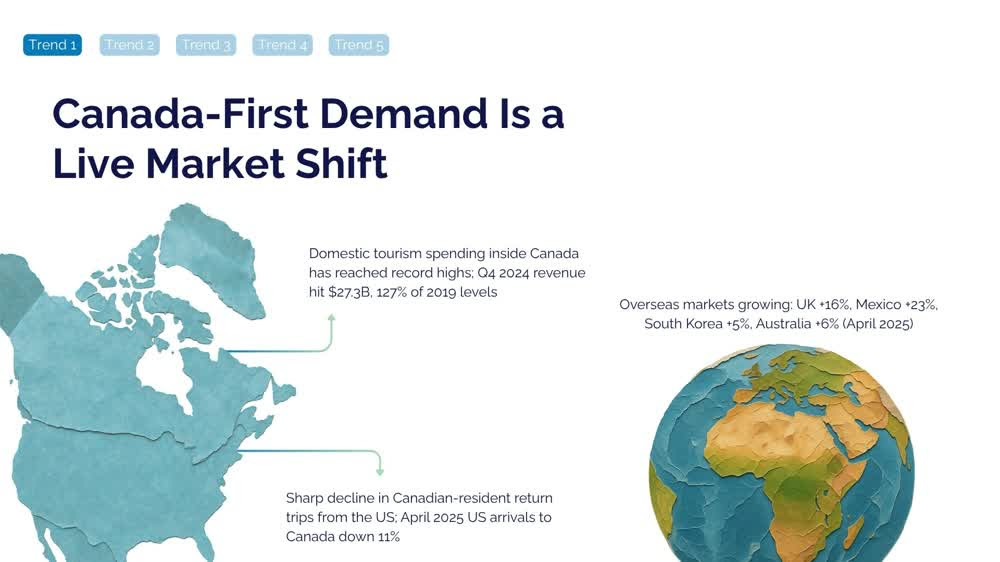
- Canada’s summer of 2025 broke records — nearly $60 billion in tourism revenue from May through August, up 6% year-over-year, with 89% of regions posting gains and 59% outperforming major metros. Regional destinations are having a moment.
- The US-Canada trade tensions handed domestic tourism an unlikely tailwind. Canadian trips to the US fell 25% in 2025, while domestic tourism spending rose 2.7% and accommodation and dining spending jumped 5.6% for the year. Canadians travelling in our own country is now a structural trend worth planning around, not a blip.
- 80% of Canadians strongly support tourism. That’s dramatically above the global average, but the resident consideration index is low, meaning that locals don’t feel like they’re sharing in the benefits of the growing tourism economy.
How you could build something similar
The workflow has almost nothing to do with tourism. The same approach works for any marketing leader who’s surrounded by industry information they can’t keep up with.
A financial services marketer could point this process at analyst reports and competitor activity. A retail brand could synthesize consumer sentiment research and trend forecasting. An agency could build client-specific intelligence briefs that make them dramatically better prepared than their competition.
The pattern is identical every time: identify the sources that matter in your world, let AI do the reading and synthesis, apply your own editorial judgment to what it surfaces, and deliver it in a format your audience will actually use.
The key to all of this is the human in the loop. Without someone who knows what matters and why, you just have a faster way to produce noise. With that judgment in place, you have something useful.
We’re piloting the Tourism Industry Scan with a small group of DMO partners right now. If you want in, click the link below for 3 months of free early access. If you’re in a different industry and want to use it to think through what something like this could look like for your team, same offer.
You may also like: