The Millennials Are Trying to Rebuild Social Media

It appears that some people are so dissatisfied with the current social media apps that they’re trying to create their own – and two that recently launched are starting to gain some traction.
Many Millennials remember the optimism and freedom of the late-2000s internet, and miss the real conversations of early Twitter and the genuine connections before Facebook became whatever it is today.
The hosts of one of my favourite tech podcasts, Hard Fork, had an idea: What if they built a new social media platform from scratch that could bring back some of that magic? They teamed up with the Search Engine Podcast to collaboratively launch “The Forkiverse.” It started out as a tongue-in-cheek experiment that they would use as content for their show, but in just a few weeks the platform has blown past their original goal of 2,000 users to hit 8,000 very engaged people.
That’s still a microscopic number compared to the tech giants, but as they shared in a recent episode, the most common feedback they’re getting is about how liberated people feel. They love how they can casually chat with a group of people with similar interests, without fear of trolls or the type of rage bait that is so common today on the big platforms.
Scrolling through the feed feels like you’ve hopped into a time machine to look back at how internet users interacted with each other 10+ years ago. There are cat photos (of course), inside jokes, and conversations about obscure topics. It seems entirely unlikely that The Forkiverse is going to be a threat to Instagram or X anytime soon, but it is a sign of a broader desire to recapture some of the magic of the original social media ecosystem.
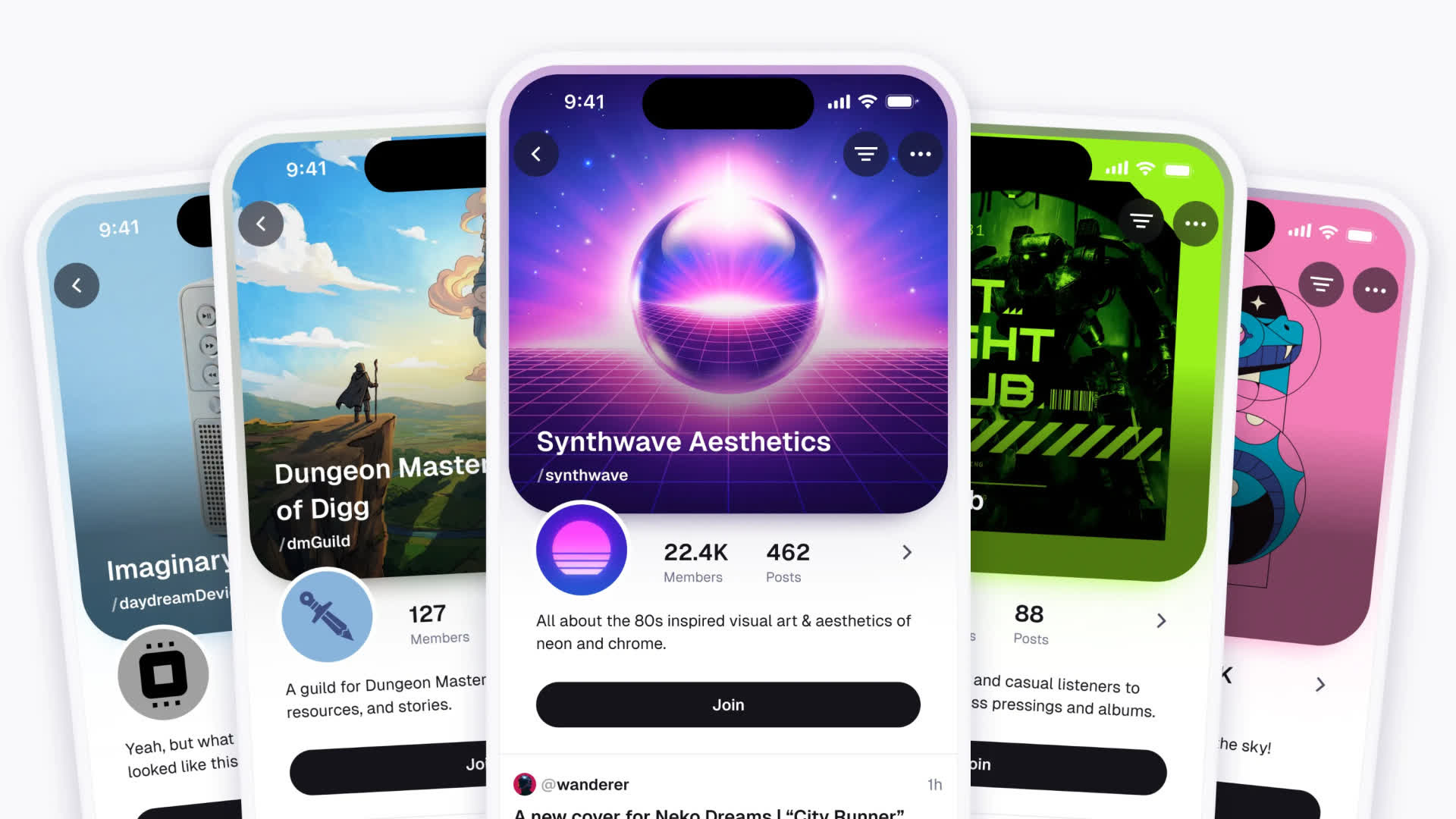
Speaking of internet OGs: Kevin Rose and Alexis Ohanian — the founders of Digg and Reddit, respectively — have also teamed up to offer an alternative. They rebuilt and relaunched Digg, which was once the Pepsi to Reddit’s Coke in the battle to become the internet’s most popular website. Digg went all but dormant for many years, but has just resurfaced thanks to the unlikely partnership of once-heated rivals.
The new Digg promises to be a platform where every user is verified and people can have conversations with real humans. Ironically, they are using AI to weed out bots and make sure that people are who they say they are. They’re also going beyond simple identity verification. For example, in the Oura ring community, they’re using the tech to verify that people are actual users of the health tracking device.
Digg officially launched last Wednesday to a group of 67,000 invite-only users, and that number appears to be growing quickly.
These are just two examples of a much larger sentiment. Will either Digg or The Forkiverse become a real threat to the Meta-monopoly? Probably not, but the trend follows a lot of data we’ve been seeing about how people aren’t posting in public anymore.
That desire to share and connect hasn’t gone anywhere, so it’s not surprising that new, less toxic places have started to pop up, and people are really excited about them.
You may also like: